One line
Lucky Dangle is a lucky charm for your Mac or Windows PC, hanging from the top edge of your screen.
Facts, ready-to-use copy, video and high-resolution images for the little lucky charm that hangs from your screen.
Three fact-checked lengths, depending on the space you have.
Lucky Dangle is a lucky charm for your Mac or Windows PC, hanging from the top edge of your screen.
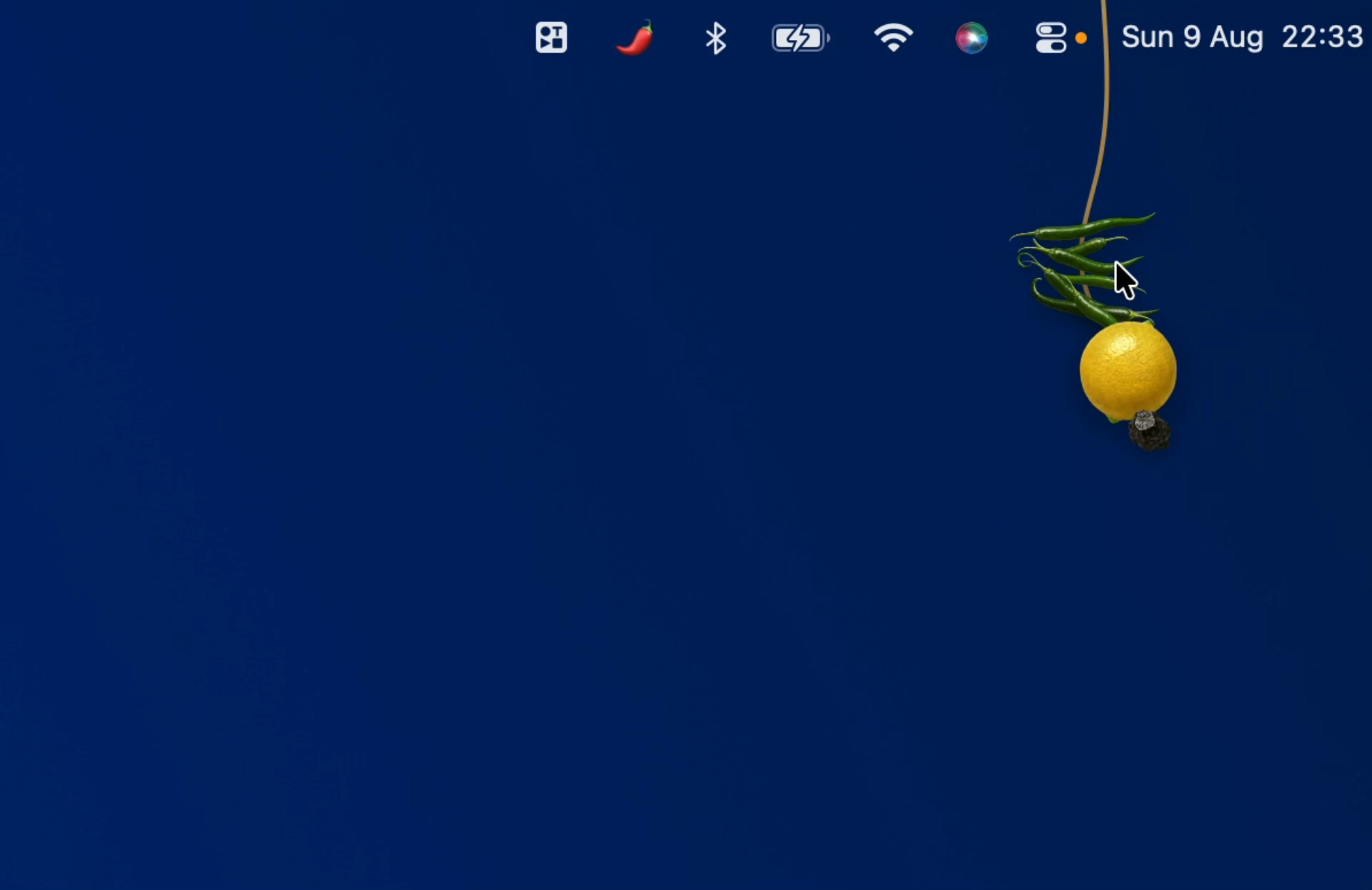
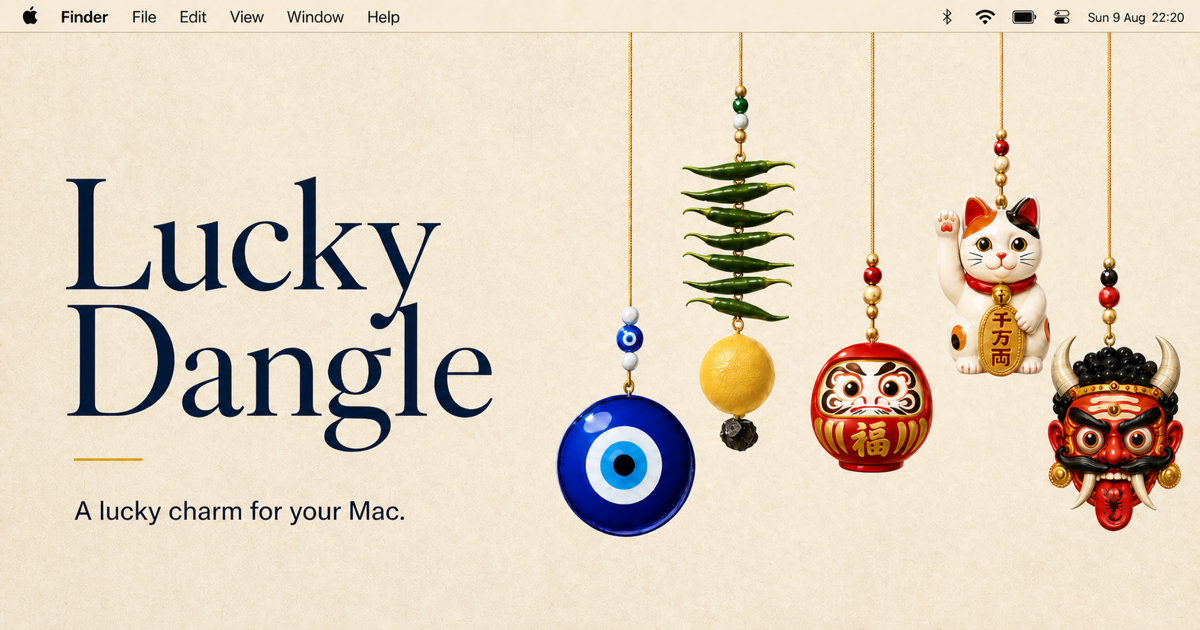
Lucky Dangle hangs a lucky charm from the top edge of your screen, on Mac and Windows. It sways when you grab and flick it, stays out of every other click, and drops in when you call it with a shortcut. Eleven charms ship with their own small rituals, plus any emoji.
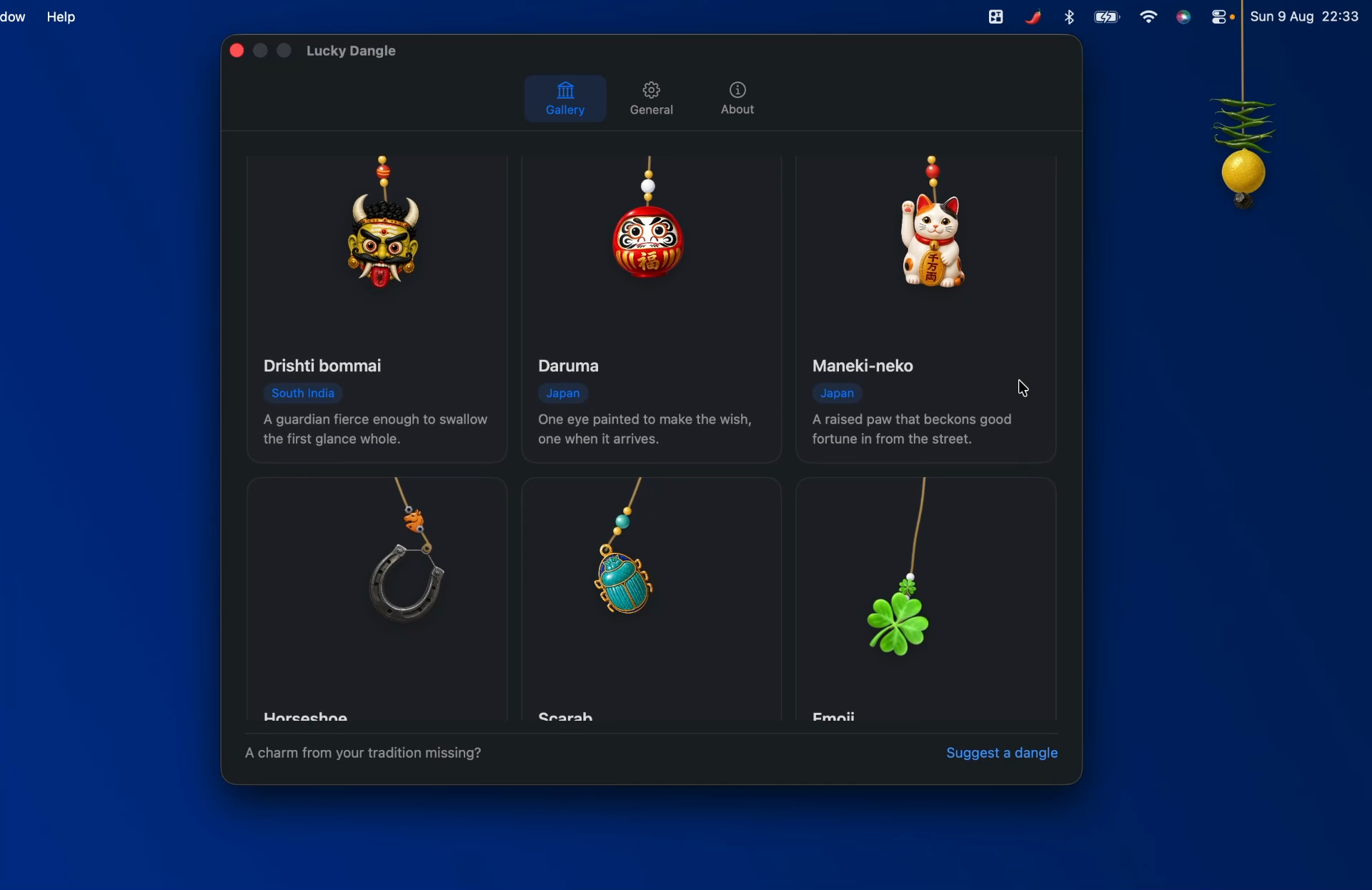
Lucky Dangle is a Mac and Windows app that hangs a lucky charm from the top edge of your screen. Grab it, give it a flick and it sways on a rope simulation; every pixel except the charm itself is click-through, so it never intercepts a click meant for the window beneath. It lives in the menu bar on Mac and the tray on Windows, with no Dock icon or open window, and keyboard shortcuts hide it or call it back before a deploy, a demo or an interview. Eleven charms ship today, drawn from several traditions and each accompanied by an account of where it comes from: the nazar boncuğu, the hamsa, nimbu-mirchi, the ghanta, drishti bommai, the páncháng jié, the daruma, maneki-neko, a horseshoe, a scarab and a himmeli. Each has a small ritual of its own, and any emoji can be hung instead. One purchase covers both platforms. There is no account, subscription, license key or in-app telemetry. New charms arrive in free updates for everyone.
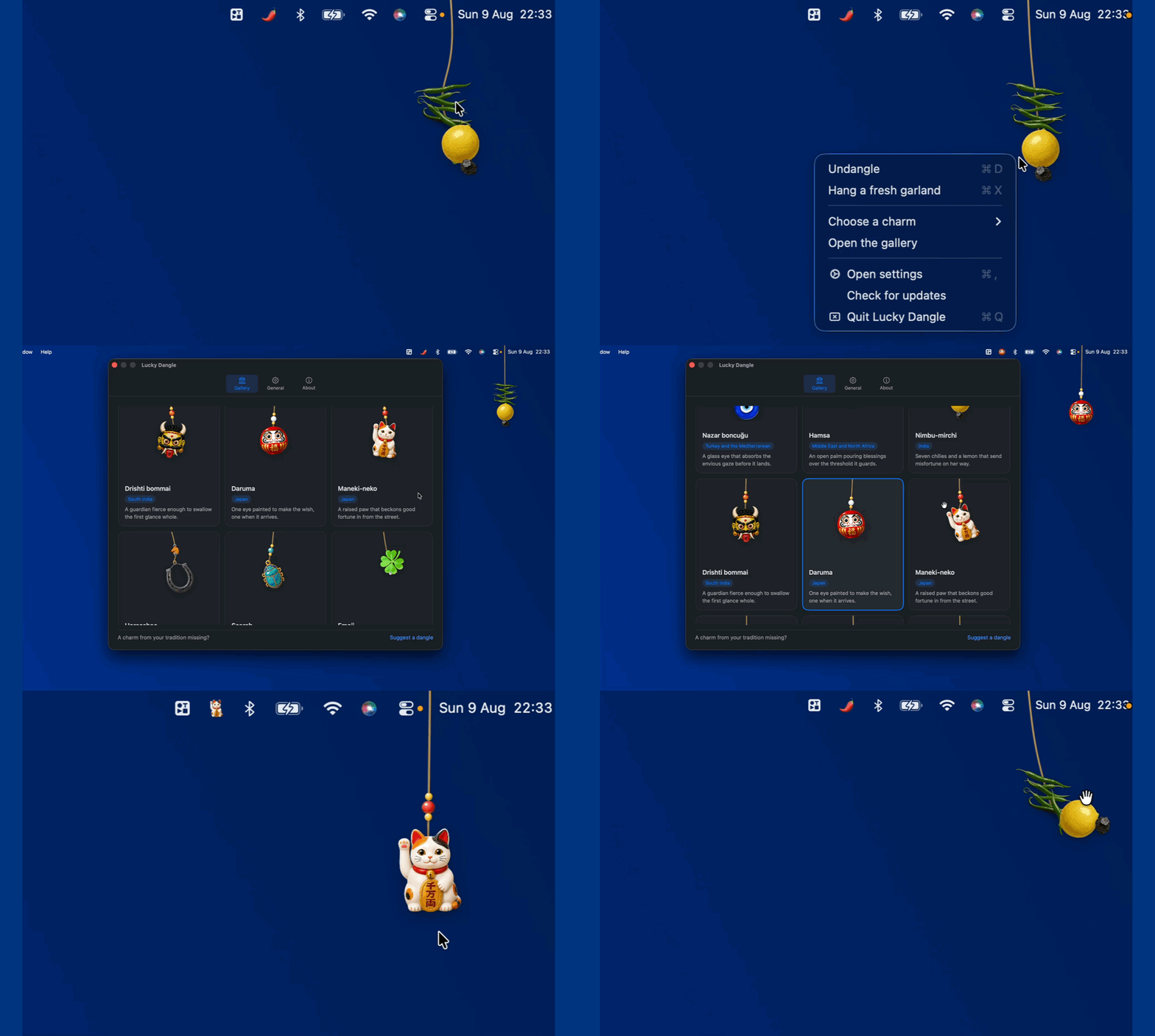
Silent, 27 seconds. The swaying is the one thing a screenshot cannot show, so if you use only one asset, use this one.
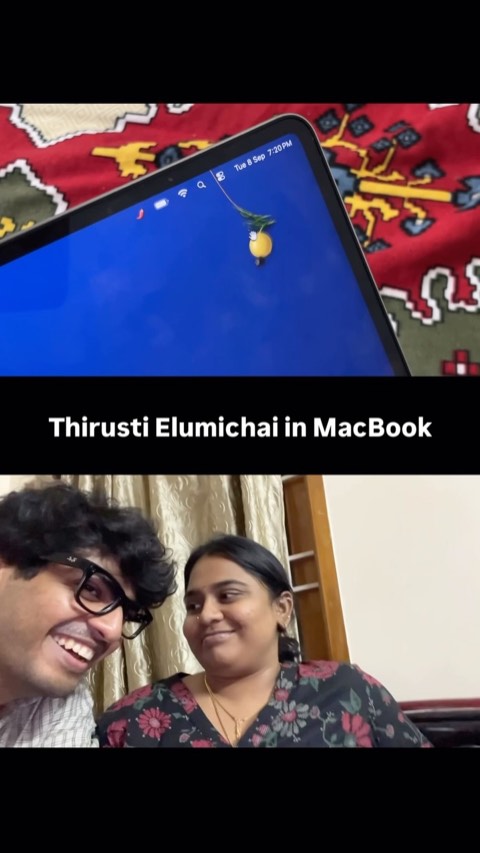
Creators are filming their charms for reels. A few favorites, in case the story needs real desks and faces.
Click a preview or its download link for the original file.
Each charm comes from a living tradition. These are the names and origins used by the app.
| Charm | Origin |
|---|---|
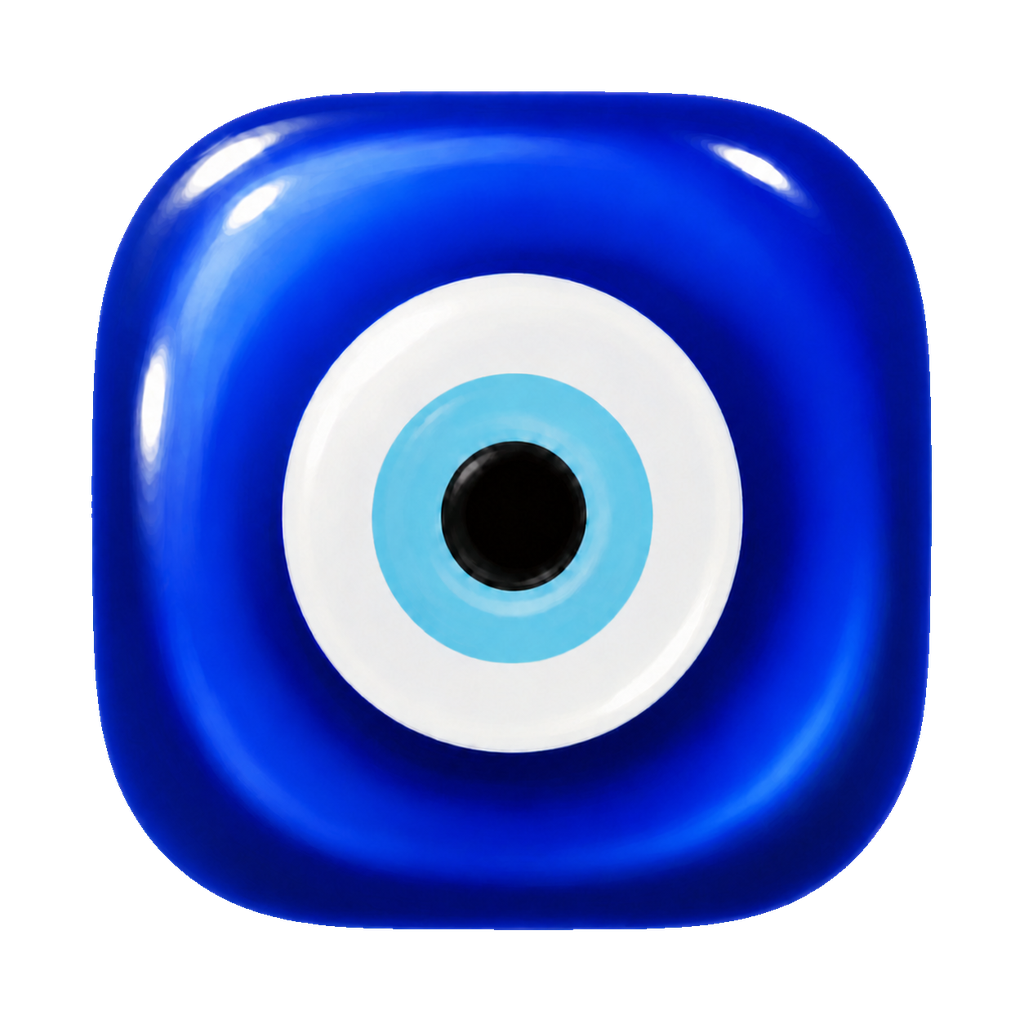
| Nazar boncuğu | Turkey and the Mediterranean |
| Hamsa | Middle East and North Africa |
| Nimbu-mirchi | India |
| Ghanta | India |
| Drishti bommai | South India |
| Páncháng jié | China |
| Daruma | Japan |
| Maneki-neko | Japan |
| Horseshoe | Europe and the Americas |
| Scarab | Ancient Egypt |
| Himmeli | Finland |
A note on the daruma: you ink one eye when you make a wish and the second when it arrives. The nazar boncuğu is Turkish and Mediterranean, rather than South Asian—a useful distinction even though the app was made by an Indian developer.

Karthik Mahadevan Designer and developer · Amsterdam
Lucky Dangle is made by Karthik Mahadevan, a designer and developer based in Amsterdam. He grew up around charms like these: a nimbu-mirchi over the door, a drishti bommai facing outward to catch the first bad glance. His Mac had no equivalent, so he built one. He designed every illustration, built the rope physics and wrote the stories in the app.
Contact Karthik